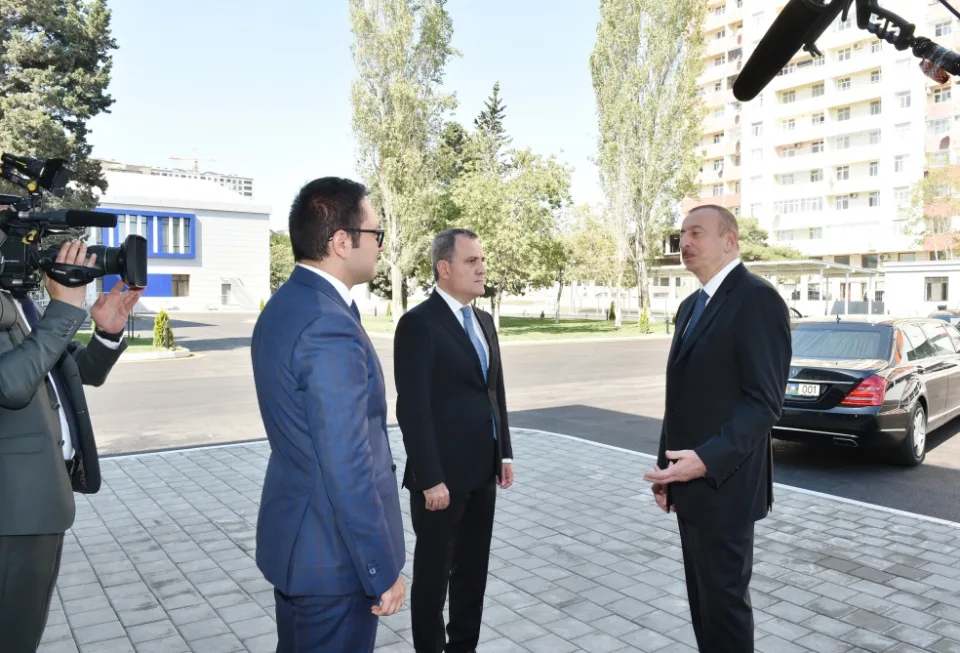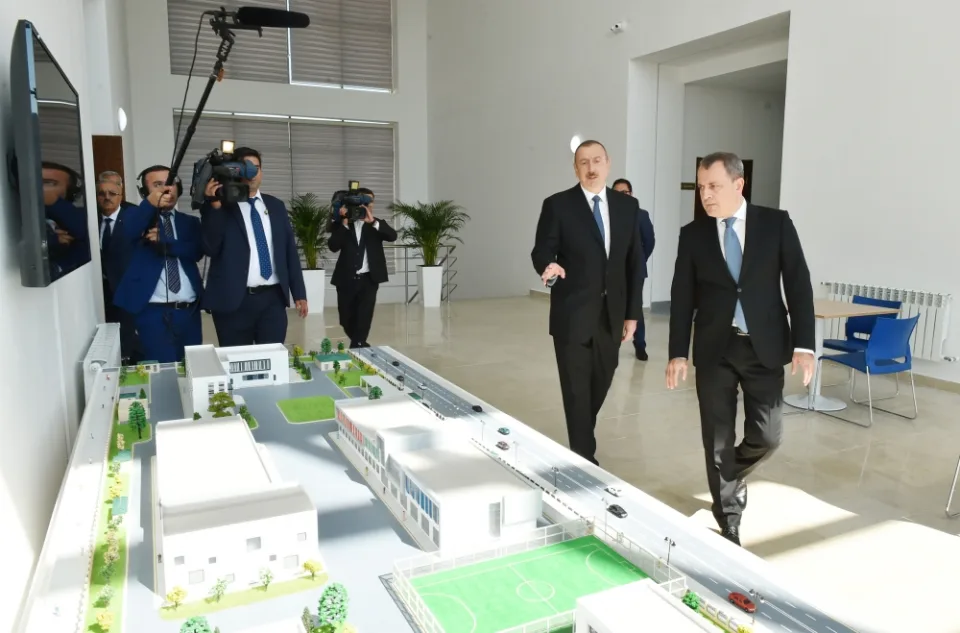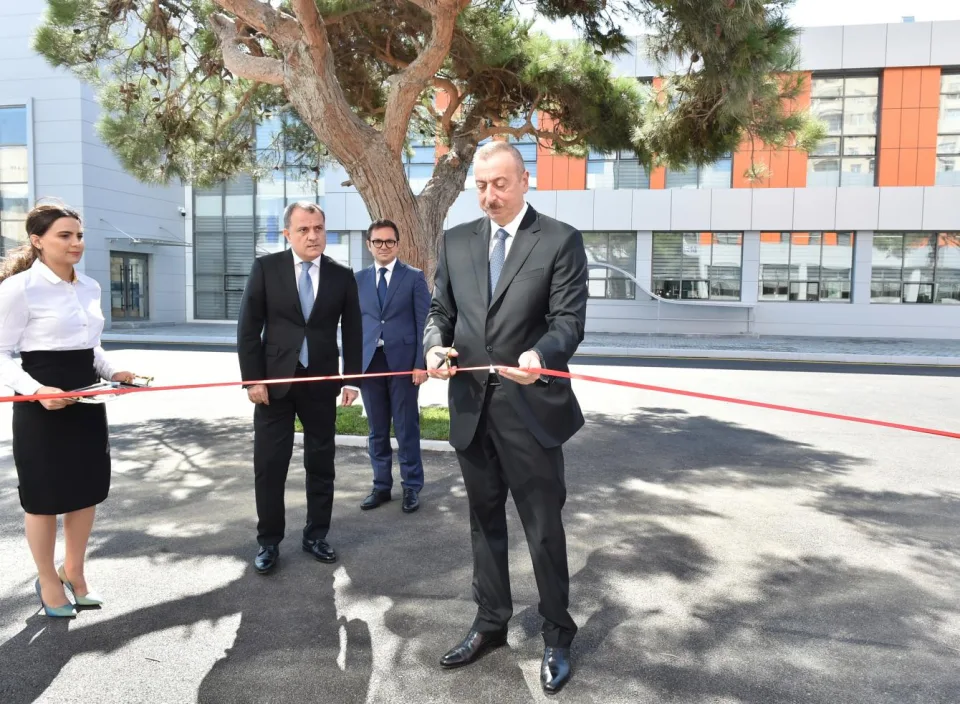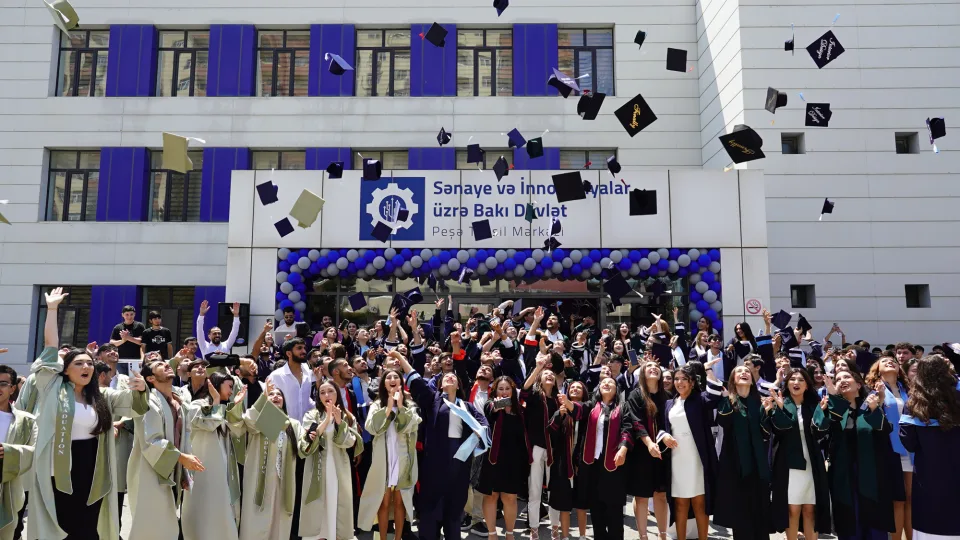

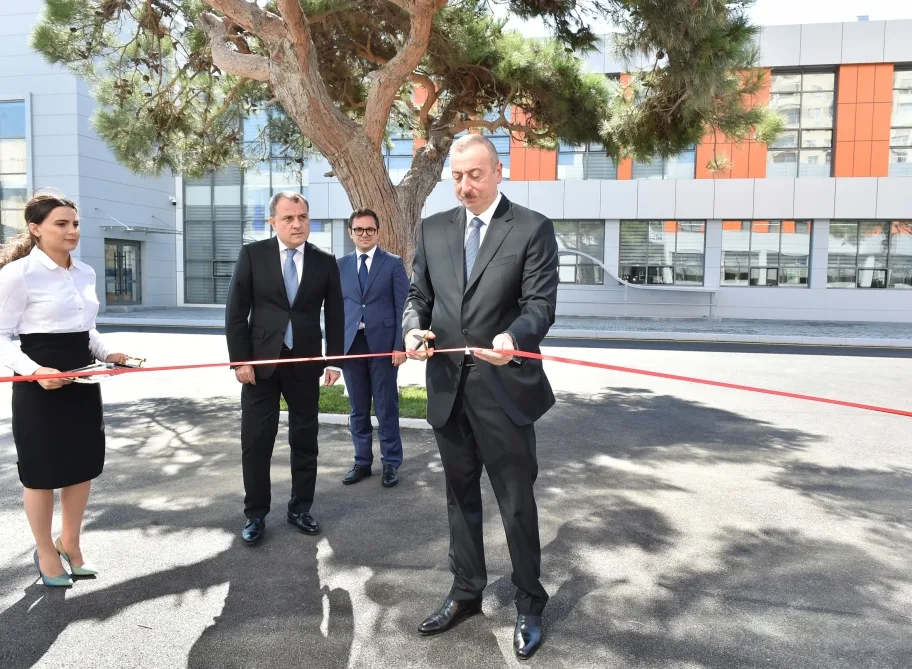
The Baku State Vocational Education Center on Industry and Innovation was opened on September 13. President of the Azerbaijan Republic, Ilham Aliyev attended the opening.
Minister of Education Jeyhun Bayramov briefed the President on the work done. It was noted that the Baku State Vocational Training Center for Industry and Innovation, established in 2016 on the basis of an agreement signed between the Ministry of Education and the KT Consortium of the Republic of Korea, is a vocational training institution based on international educational standards.
The center will train specialists who organize production processes in industrial enterprises and have the ability to work with innovative technologies.
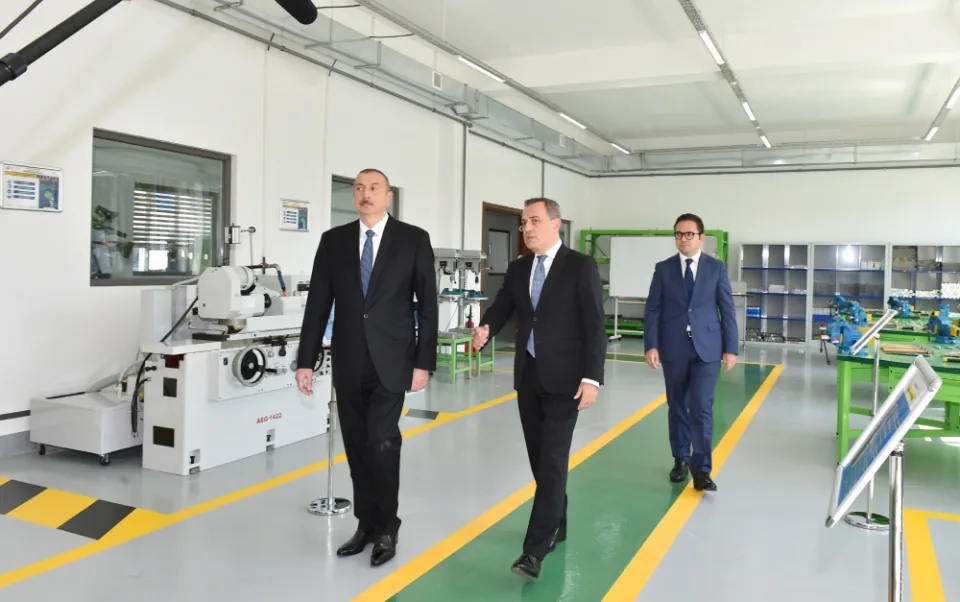
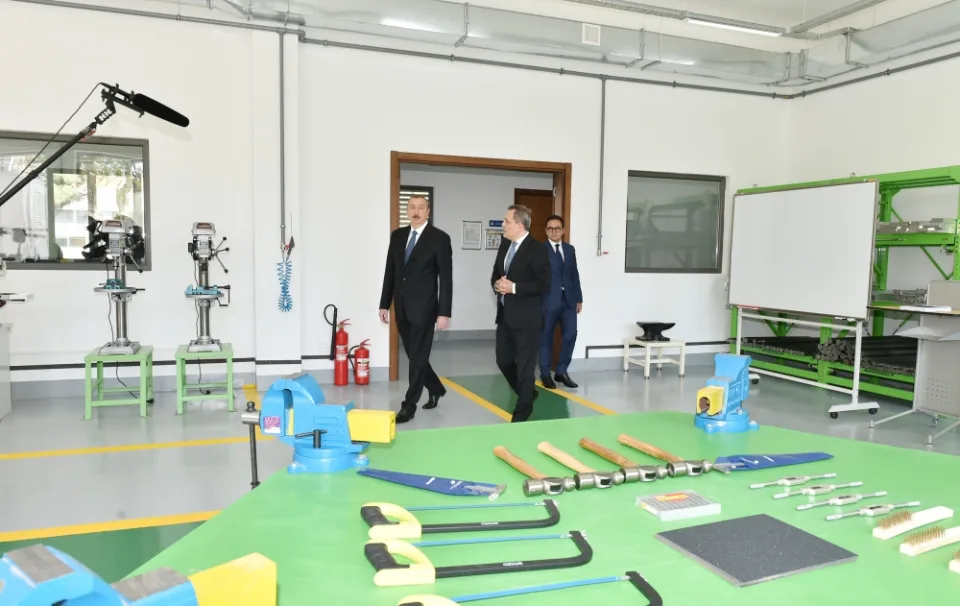
The head of state cut the ribbon symbolizing the opening of the center. President Ilham Aliyev got acquainted with the conditions created at the Vocational Education Center.
It was noted that the Center was established on the basis of the model of vocational education of the Korea Republic. The Center has all the conditions for the formation of theoretical and practical skills. Students will be taught models based on ICT innovations, car maintenance. Equipped with the most modern material and technical base, the center provides the opportunity to study in 1-year programs in 8 different specialties. The training process will be organized in a completely new format by qualified professionals trained in Korea. Continuing education and extensive employment opportunities will be created for students graduating in these specialties. They will acquire the skills and habits to put their profession into practice. In addition to eight technical specialties, the Center will also organize short-term professional development courses. Students will also be able to take internationally certified courses.
The introduction of such vocational schools is very important for those who cannot be admitted to universities. A graduate who is not admitted to a higher education institution can work in any field in the future by acquiring professional skills, including entering a vocational school. The implementation of such projects not only contributes to the development of vocational education, but also plays an important role in increasing employment.
In order to ensure transparent, efficient and centralized management of extra-budgetary revenues and expenditures of state vocational education institutions and to play the role of a financing mechanism in the development of vocational education, the Vocational Education Development Fund was established and a number of normative legal acts were prepared. Rationalization and optimization of the network of vocational education institutions through the merger of vocational education institutions and the establishment of specialized vocational education centers in certain areas, the establishment of pilot vocational education institutions meeting modern standards are among the important tasks set in the Road Map.
In 2018, 24 State Vocational Education Centers were established on the basis of 55 vocational education institutions operating in the regions and in Baku. It is planned to establish two more centers in this direction. Baku State Vocational Education Center for Industry and Innovation has already received the status of a public legal entity. Preparations are underway for other Vocational Education Centers to operate as public legal entities. At the same time, the "Strategic Roadmap for the Development of Vocational Education and Training in Azerbaijan" initially identified the establishment of 10 pilot vocational schools in various areas by 2020. According to the Strategic Roadmap, pilot vocational education institutions will be overhauled or new vocational schools will be built to meet modern standards and meet demand. According to the President's order, starting from January 1, 2018, the weekly workload of teachers working in public vocational education institutions, whose knowledge and skills have been diagnostically assessed, has been increased 1.5 times, and the average monthly salary has been doubled. Cooperation with employers in the training of qualified personnel meeting the requirements of the labor market and the establishment of a working model of vocational education is important for the development of this area. In general, 29 training sessions were conducted for 420 engineering and pedagogical staff of vocational education institutions this year. Receipt of documents for vocational education institutions was carried out free of charge and electronically in the "ASAN service" centers, and in the cities and regions where "ASAN service" centers do not operate in the relevant vocational education institutions.
All this has a direct positive impact on the field of vocational education and opens wide opportunities for those who want to try themselves as a specialist in various fields in the future.